


TBC Bank
2025-2026

TBC Bank
Designing transactional experiences for Georgia
Mobile & Web
Retail & Business
Redesign
0 → 1
Transfers main page redesign Q2, 2025
Time to complete a frequent transfer
23s → 9s
Time reduced
Clicks to initiate a transfer
4 → 2 clicks
Interaction cost reduced
Redesigned main page
Streamlining recurring transfers
New smart widgets for Transfers
74%
acceptance rate
Main
Recipients
Scheduled

You transfer 25₾ regularly to Nino
Schedule transfer
Between
my accounts
Transfer to someone
From other bank 24/7
International transfer
Transfer
to treasury
Remittances
Currency exchange
Less
Start new
Transfer
Between
accounts
Remittances
Budget
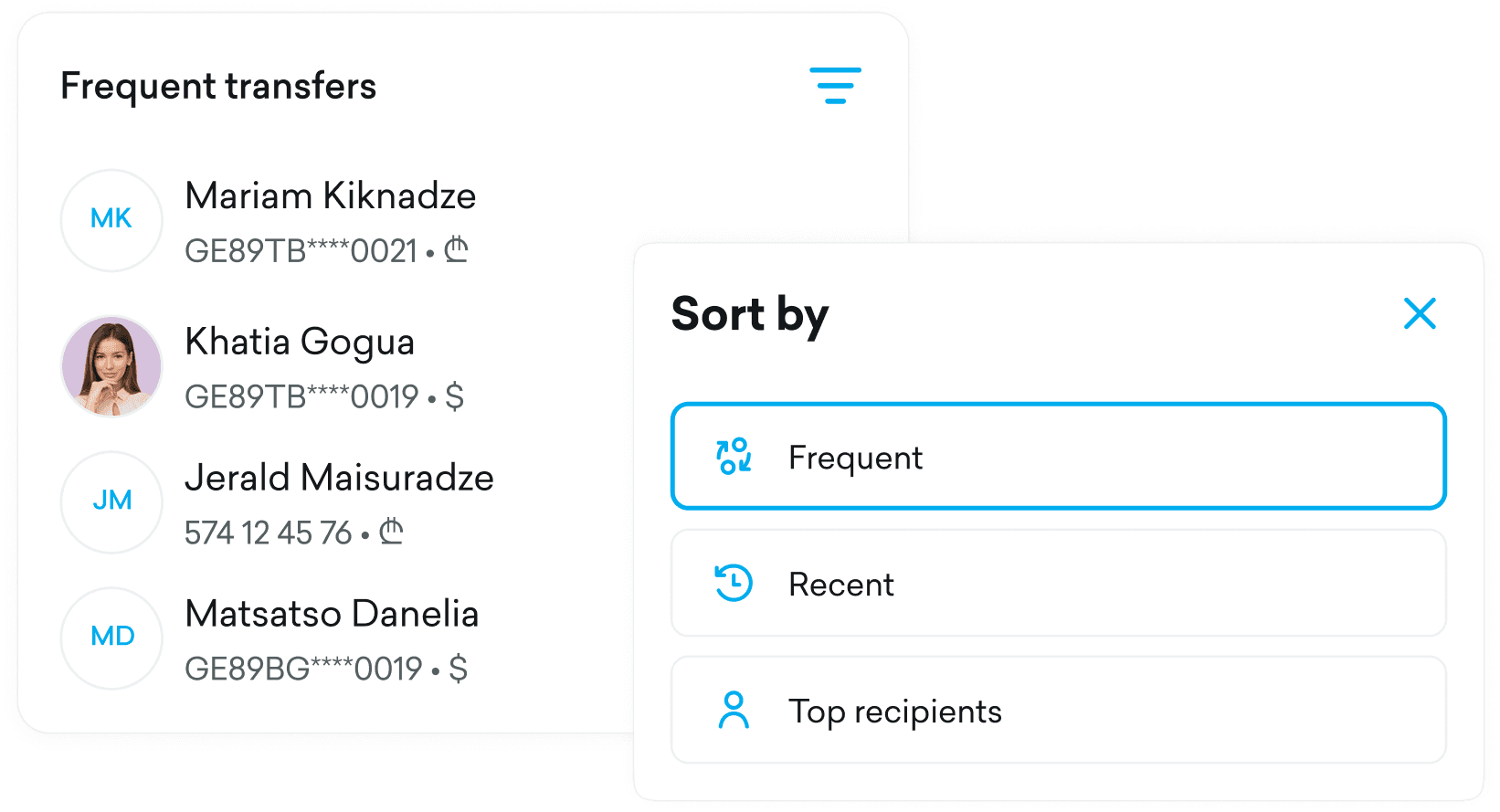
My transfers
MK
Mariam Kiknadze
GE89TB****0021 • ₾
Khatia Gogua
GE89TB****0019 • $
JM
Jerald Maisuradze
574 12 45 76 • ₾
MD
Matsatso Danelia
GE89BG****0019 • $
Transfers

2₾ is left on KHATIA's card
Add funds
2₾ is left on your card
Transfer from other bank
Home
Products
Transfers
Payments
Exchange more than 2,500₾ and get a better rate
request rate
Scheduled transfers
Adoption increase from
6% →
18%
86.4%
CSAT
Q4
88.6%
CES
Q4
71%
transfers are completed from this section
New section surfaces personalized, data-based suggestions
FX redesign + new feature delivery Q3-4, 2025
58s
time to task
median time taken for rate request process between Oct, 25 - Dec, 25
1,200+
high-value clients
This number represents high-volume conversion clients returned from external channels
52%
conversion rate
10% increase within first 2 months
“What’s new” announcements
via motion design
New retail bank feature launched 0 → 1
Request exchange rate
Updated look and navigation
Rates
Context
Within my first quarter at TBC Bank, I led the redesign of the biggest daily banking domain - Transfers and supported the Payments team as part of a broader effort to improve core transactional journeys. I was presenting this work to the board of directors which got approved as a new direction for how transactional experiences should evolve.
I then took ownership of another critical journey in retail banking, introducing a new capability that allows users to request better exchange rates for currency conversions, alongside a broader redesign of the foreign exchange (FX) domain. This initiative followed the same validation process and was also approved at the board level.
Domain challenges
Transfers, Payments & FX
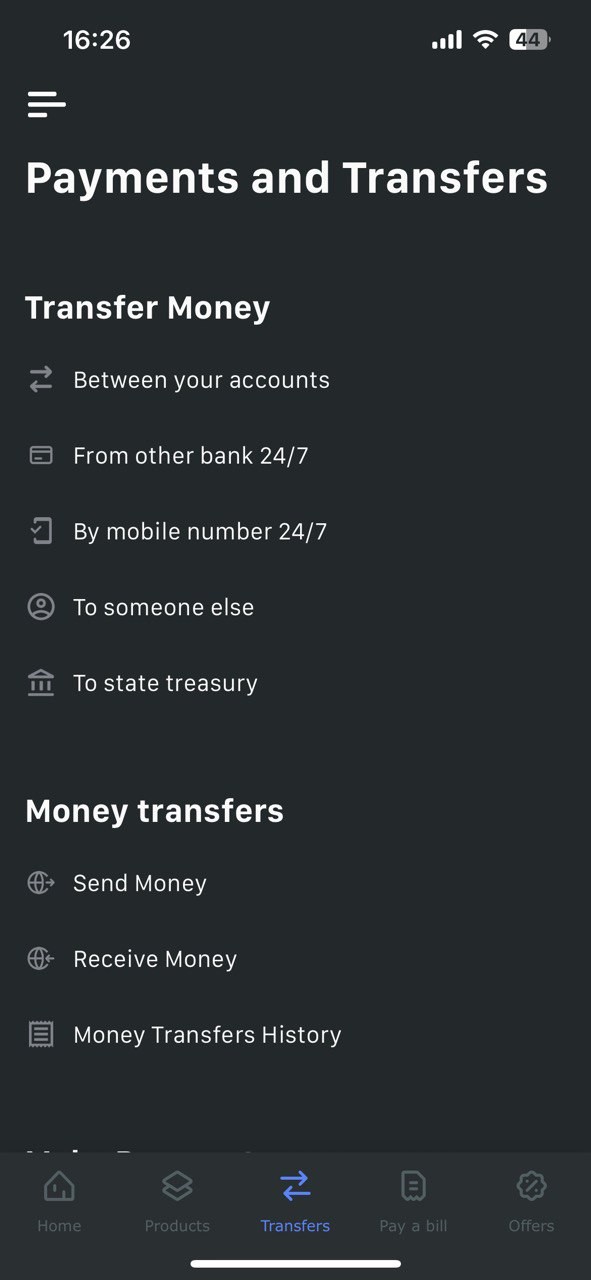
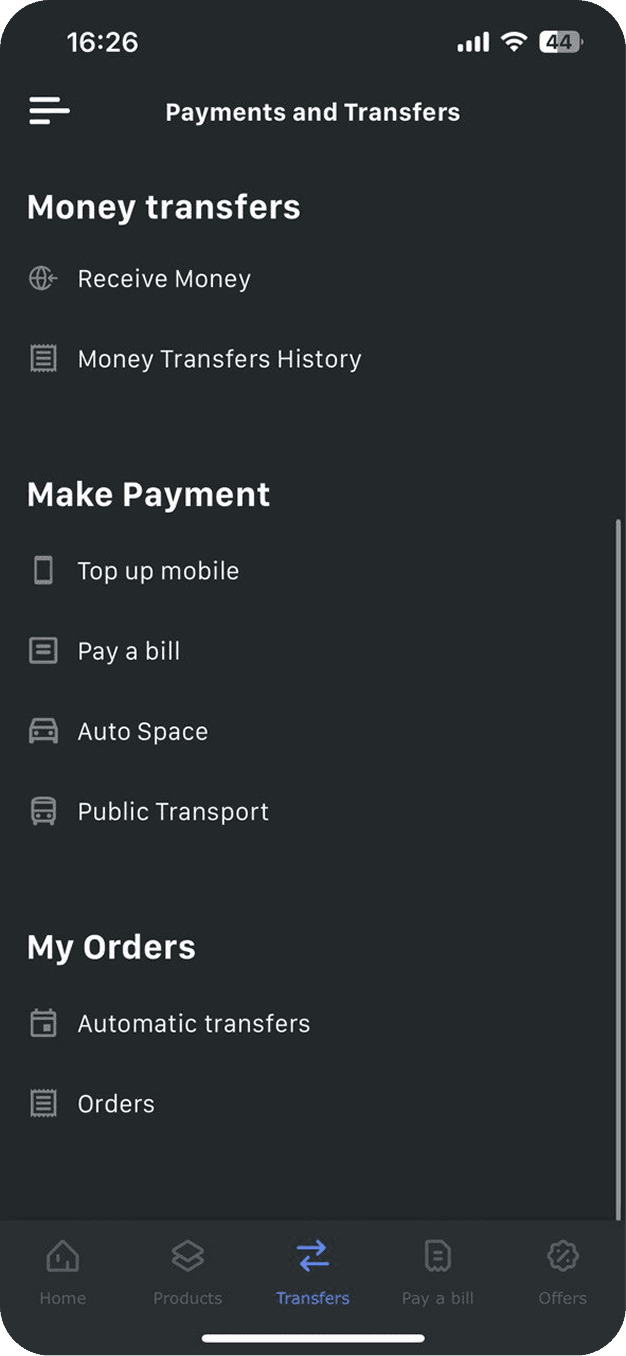
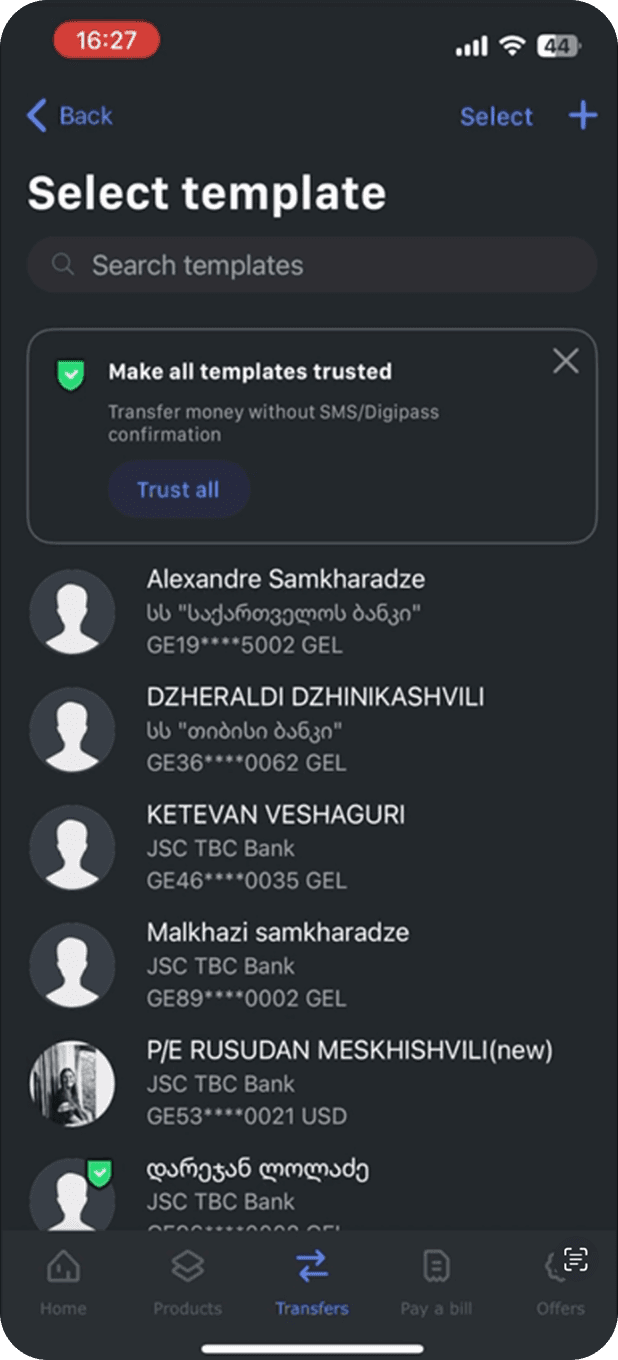
Transactional flows were fragmented. Core actions were buried under long lists, duplicated across sections, and inconsistently prioritized.
before update
Key changes
✖ 67% of transfers were repeated, yet they were buried behind method lists, without any prioritization and personalization
➔ Reduced initiation cost and surfaced relevant actions directly on the main screen, prioritizing recurring and high-intent actions
✖ Long list of templates
➔ Created recipient profiles, allowing multiple accounts to be grouped under a single entity
Transfers main page was redesigned as a decision surface, not just a navigation screen
✦ Time-based patterns are surfaced proactively
Transfers made around recurring dates (f.e. mid-month transfer) reappear at the right moment in the next cycle
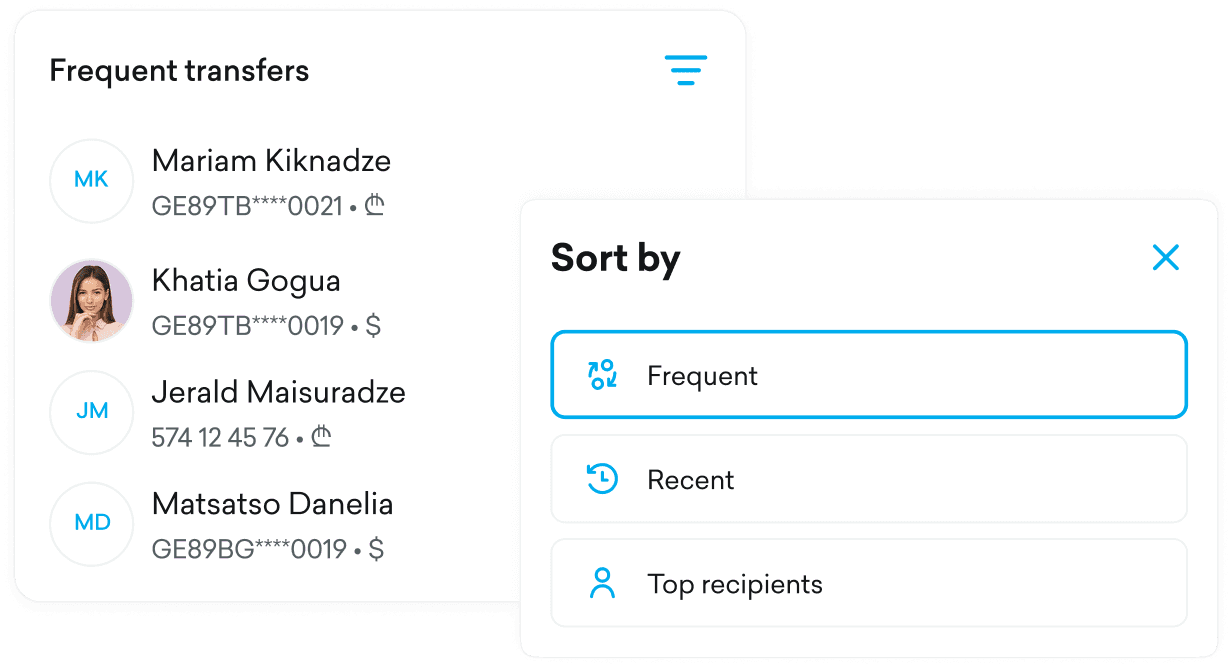

✦ Smart widgets as an acceleration layer
They assist users by:
→ surfacing recurring behaviors
→ predicting upcoming actions
And extend the ecosystem by:
→ promoting relevant features (f.e. FX rate request)
→ scaling to Payments domain, enabling cross-domain interactions
Widgets complement navigation by intercepting intent early and surfacing personalized next actions tailored to each user
✦ Scheduled transfers — from hidden to primary
Automated transfers were elevated into a dedicated space, improving visibility and increasing adoption from 6% to 18% year-over-year.
This pattern was later extended to Payments.

Performance transformation
70% of transfers are now completed in under 9 seconds, confirming that improvements apply to real user behavior, not just ideal flows.
Behavioral shift
Manual, search-driven actions → Assisted, prediction-driven execution
New retail banking feature
0 → 1
Requesting exchange rate
before update
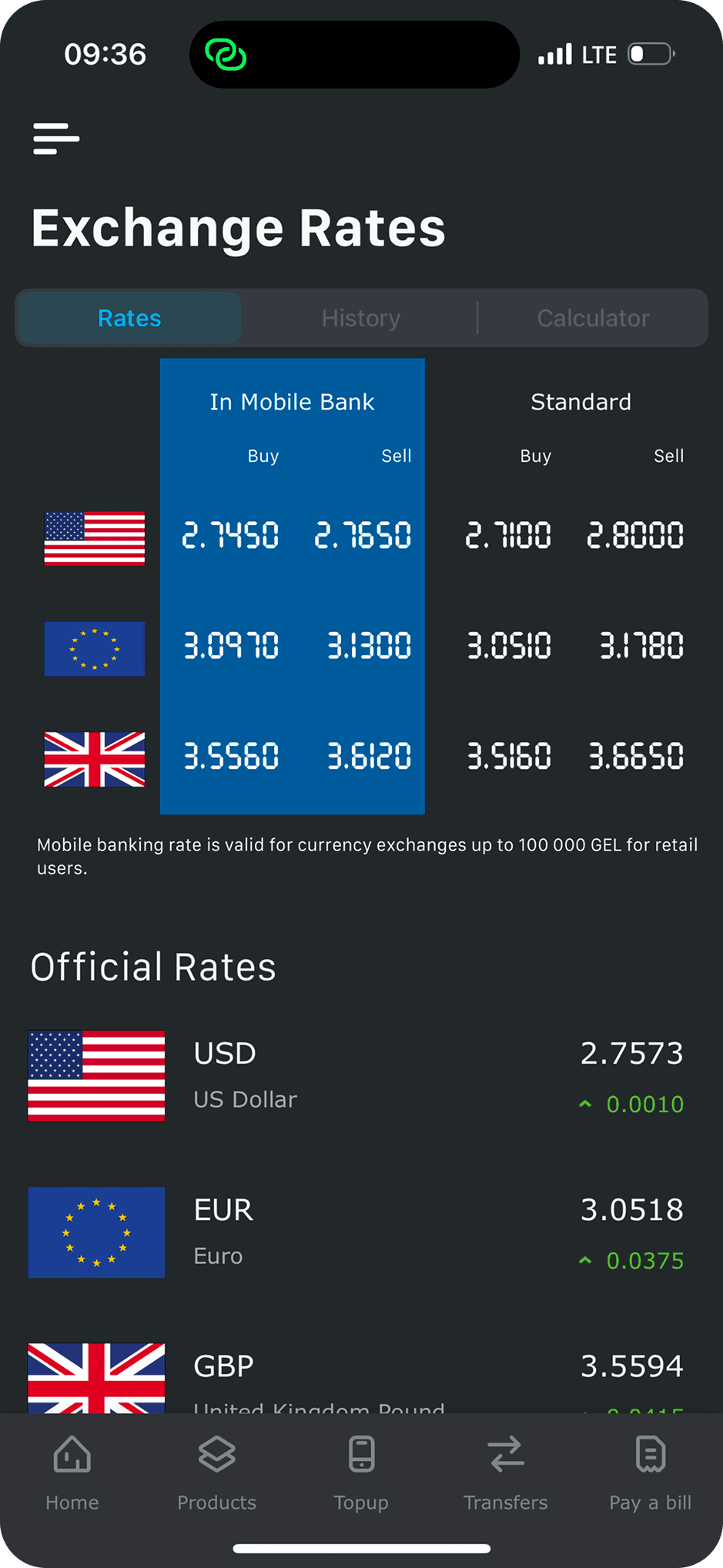
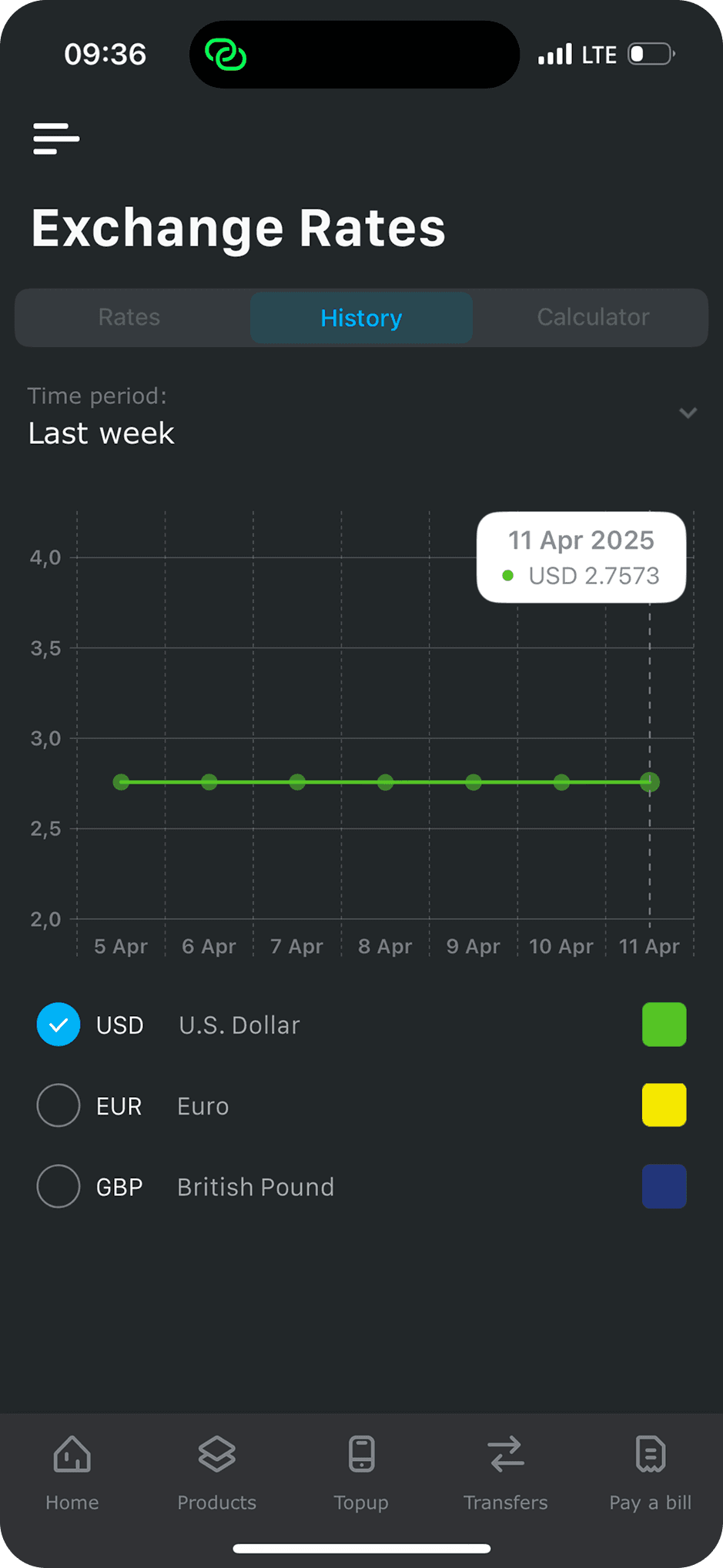
✦ Why FX domain needed a new mechanic?
User perspective - Retail users had no way to negotiate rates, even when transaction size justified it. This forced a choice between convenience (bad rate) and effort (offline negotiation).
Business perspective - Competitive rates outside of the bank were pulling high-value transactions away from TBC.
When a feature becomes a debate → from doubt to
direction
Lead the research initiative to navigate a breaking point in a concept approval phase
CONTEXT
CULTURE
APPROACH
INSIGHTS
OUTCOME
The concept of manually requesting a better rate was challenged at the board level. The concern was whether this added unnecessary friction compared to automatically offering a rate.
Georgians think in foreign currencies for high-value decisions. Negotiation is a deeply ingrained cultural behavior in many aspects of life.
To validate the direction, I initiated a research study (prototype testing and interviews via calls) focused on perception, trust and transparency.
The act of “trading with the bank” created a sense of control and engagement. Without this, many assumed the bank was hiding margins or offering unfair rates.
Findings were presented to the board, leading to alignment and approval for the development of “Rate request” feature.
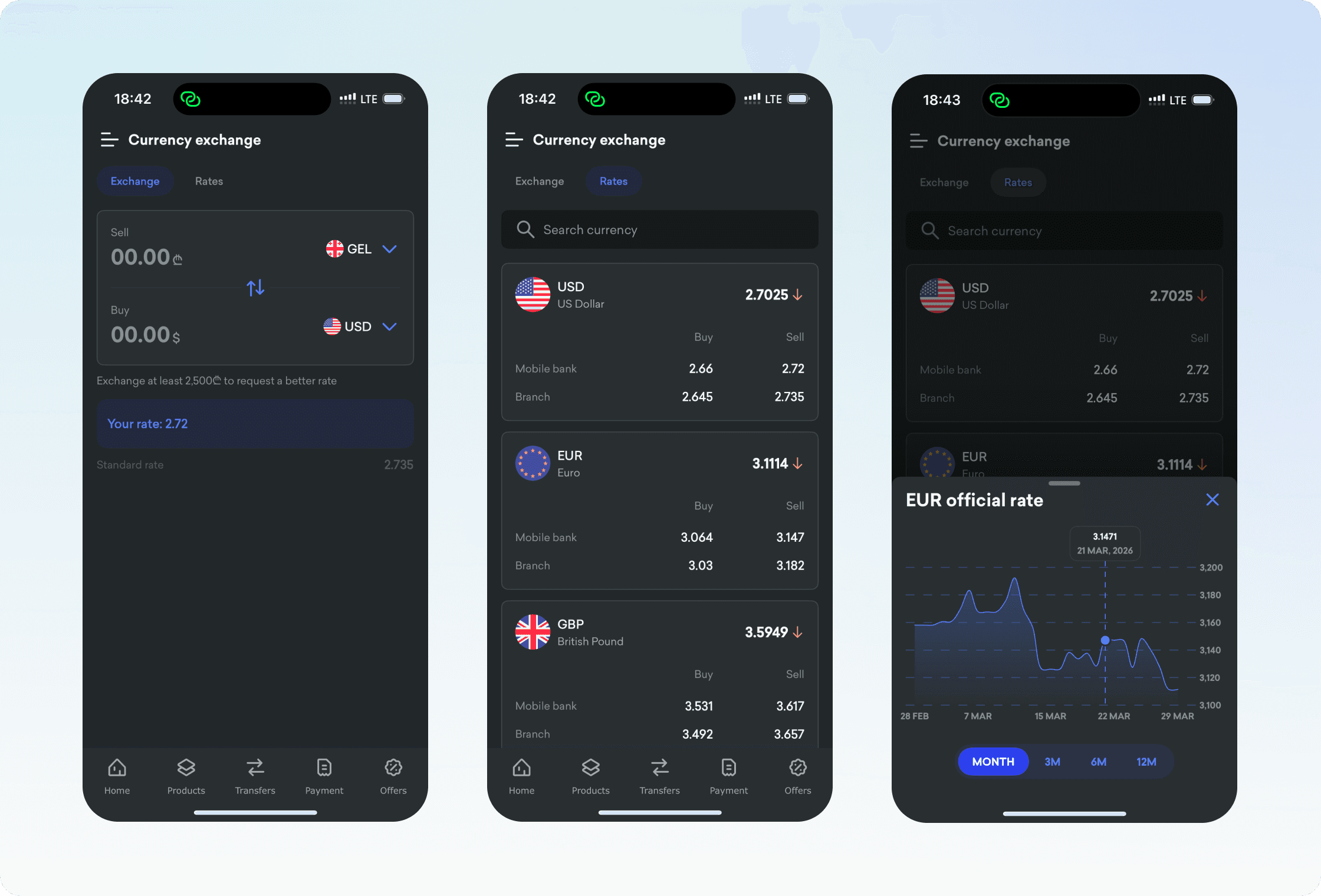
What was previously a purely informational domain evolved into an actionable experience, allowing users to either perform a standard exchange or negotiate a better rate within the same interface
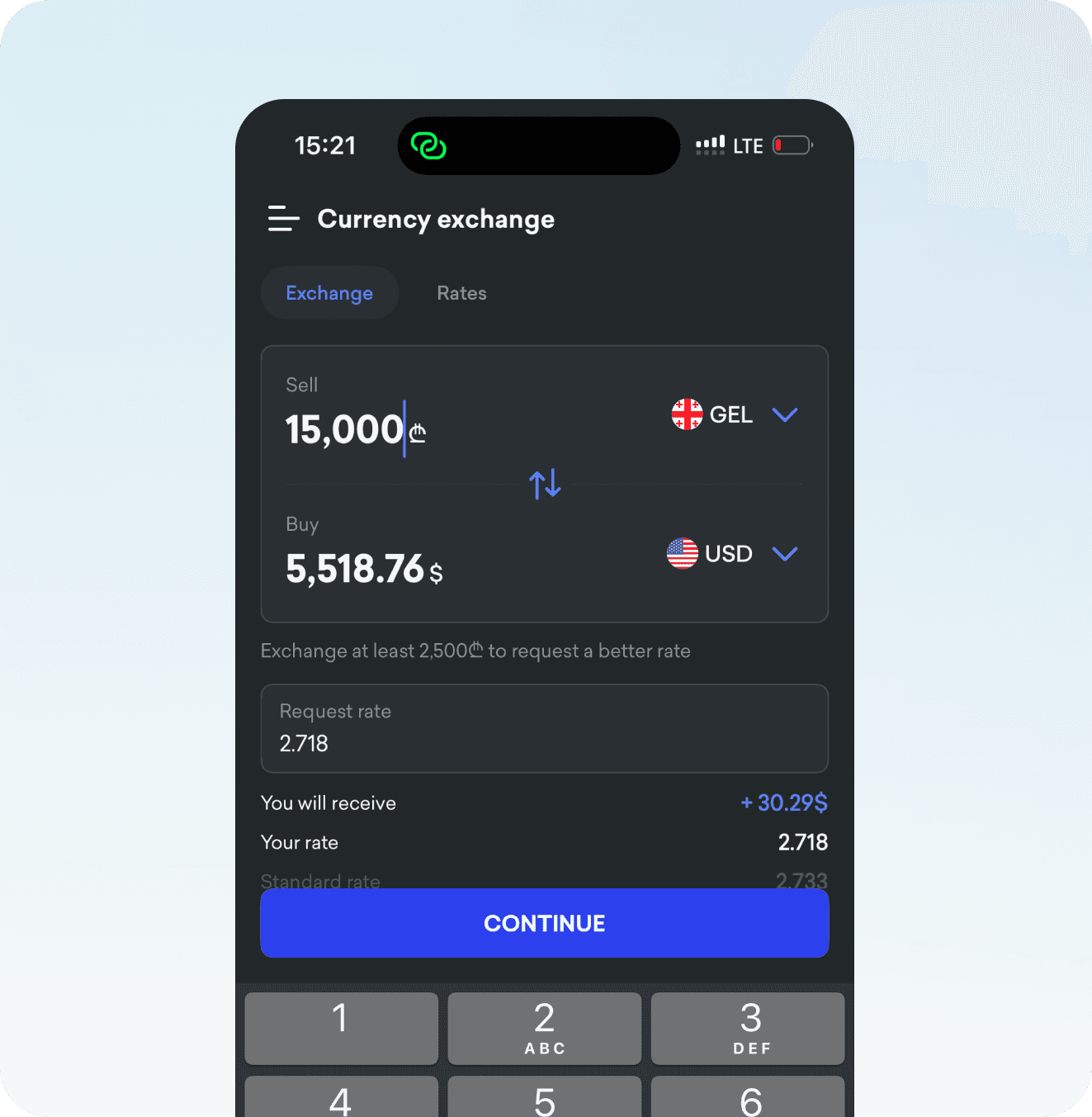
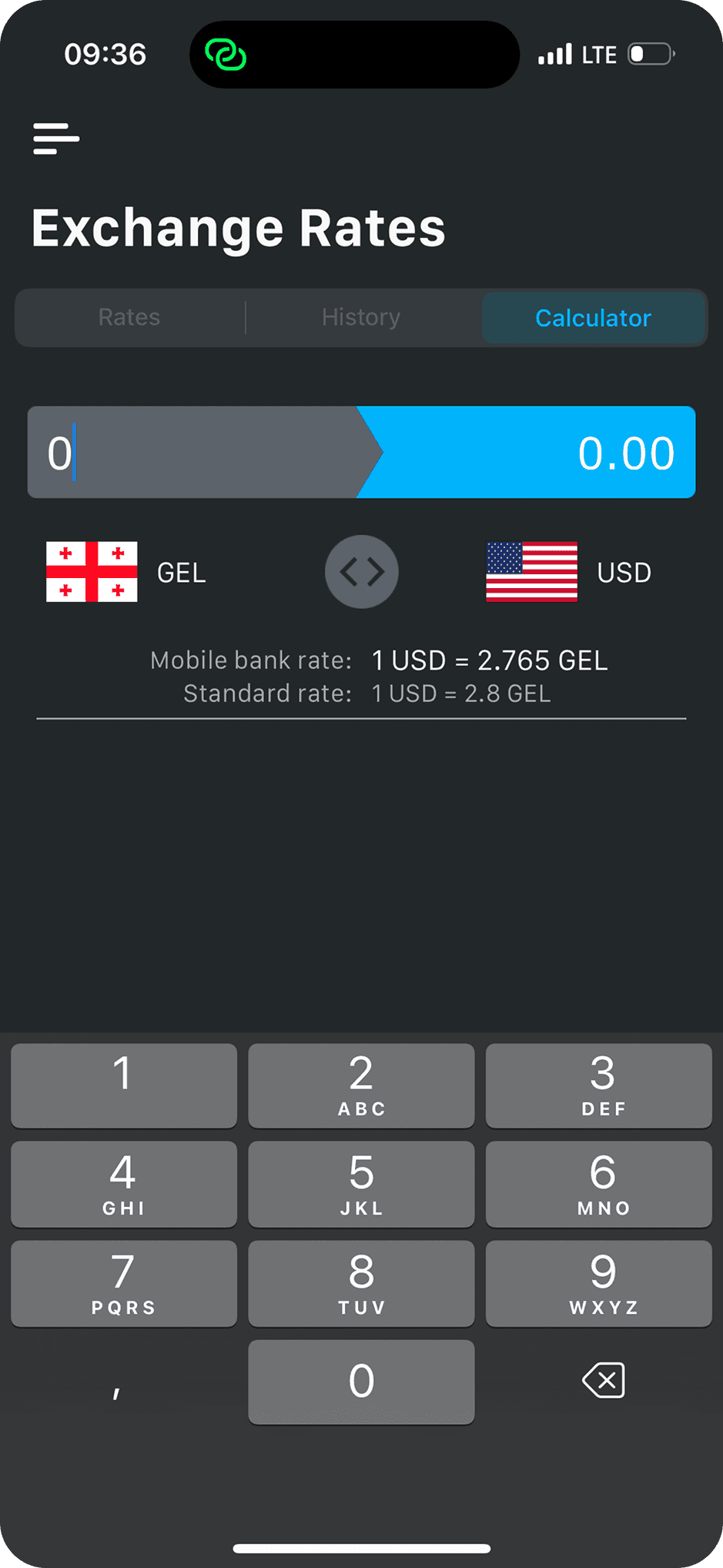
✦ Calculator and exchange in one place
For privacy reasons, the flow was adjusted so users can first calculate the exchange amount without selecting accounts.
Once they decide to proceed, they can continue with either a standard exchange or requesting a rate.
This pattern was well received by both clients and internal teams — bankers began using the same interface in branches to calculate amounts and communicate rates to customers, as observed post-launch interviews.
FX Business internet bank redesign
SOON

Vitality Group Inc.
2024
Skillwill
2023
Damen Cash
2022
Service areas